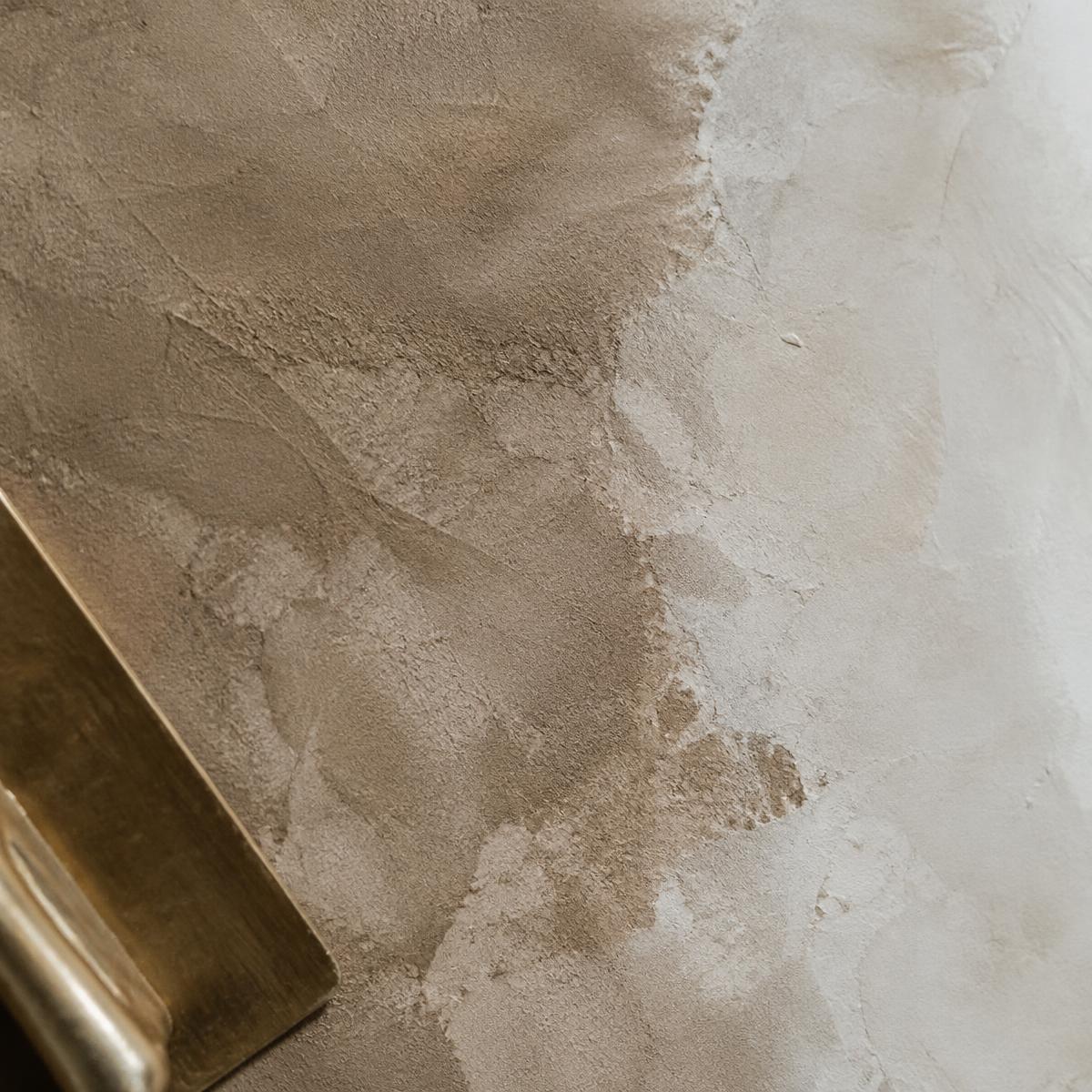
Decorative plaster brings depth, movement and a handmade quality that paint cannot replicate. Each finish is applied by hand in multiple layers, and no two walls are identical.
We apply mineral and lime-based finishes on walls, ceilings, arches and architectural elements, preparing substrates correctly so finishes perform long-term.
Typical applications
- —Feature walls and entry foyers
- —Arches, niches and curved surfaces
- —Powder rooms and bathrooms (with suitable systems)
- —Hospitality and retail interiors
- —Ceilings and vaults
Materials & techniques
- —Roman Clay and clay-based plasters
- —Tadelakt (lime plaster polished and sealed)
- —Textured mineral finishes
- —Primers and bonding coats
- —Protective waxes and sealers
Project process
- 1Consultation and site visit to understand scope, conditions and goals.
- 2Measurements, documentation of existing conditions and scope definition.
- 3Written estimate with line-item scope, exclusions and assumptions.
- 4Scheduling, material selection and procurement.
- 5Execution with protected work areas and regular progress updates.
- 6Final walkthrough, punch list and close-out.
Factors affecting cost
- —Finish system and number of layers
- —Substrate preparation required
- —Wall height, curves and detailing
- —Wet-area suitability and sealing
- —Sample panels and color development
Frequently asked questions
Can decorative plaster be used in bathrooms?+
Some systems, such as properly applied and sealed tadelakt or specific microcement systems, are designed for wet areas. Suitability depends on the product and exposure.
Do you provide samples?+
Sample boards are recommended to confirm color and texture before application.