
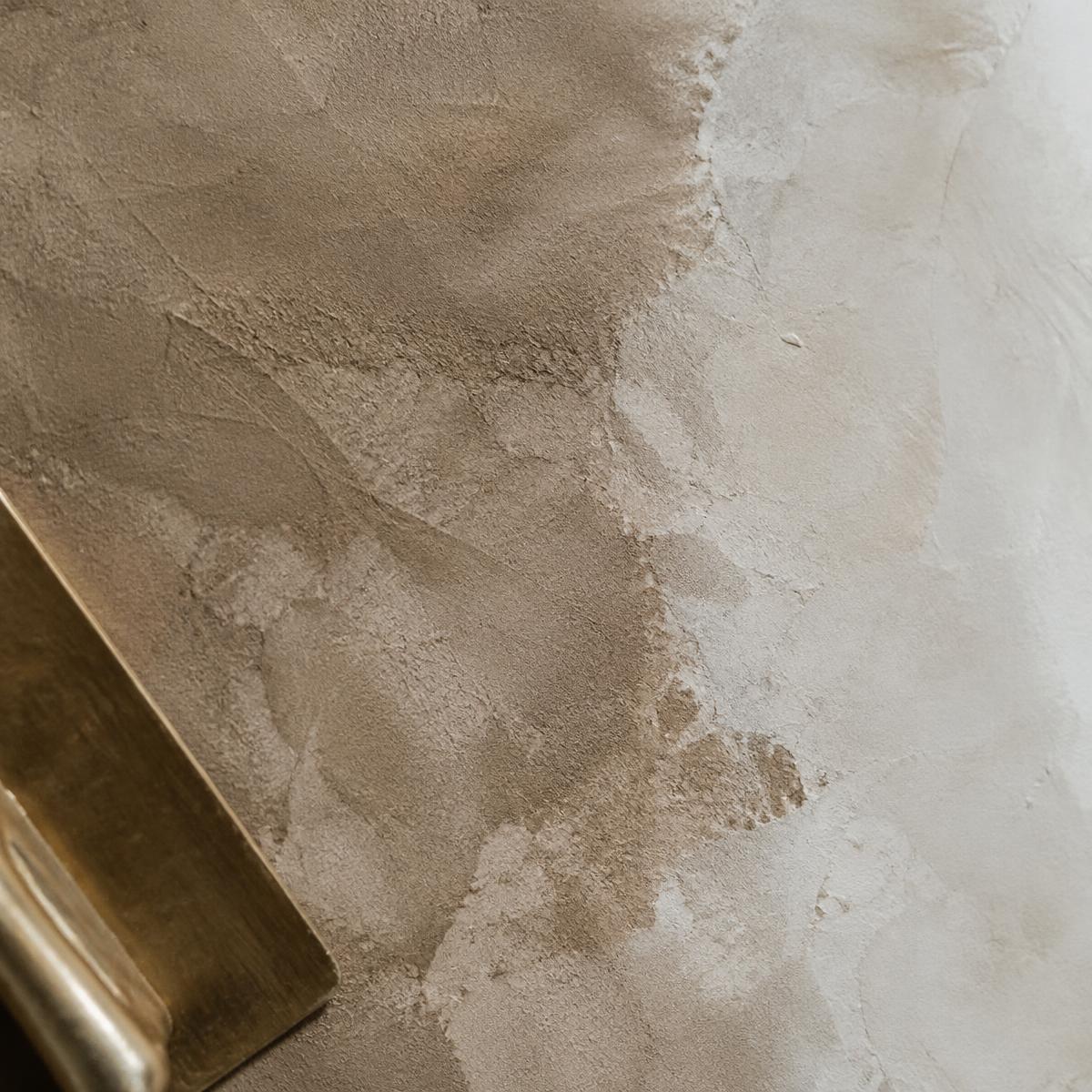
Limewash creates a soft, cloud-like matte surface with natural tonal variation. Venetian plaster — a lime-based plaster burnished with a steel trowel — produces a stone-like finish ranging from matte to high polish.
Both are traditional mineral finishes that pair beautifully with contemporary architecture and natural materials.
Typical applications
- —Living rooms and bedrooms
- —Entry halls and stairwells
- —Exterior walls (limewash, with suitable substrates)
- —Statement ceilings
- —Boutique and hospitality spaces
Materials & techniques
- —Slaked-lime limewash
- —Marmorino and polished Venetian plaster
- —Mineral primers
- —Natural waxes and sealers
Project process
- 1Consultation and site visit to understand scope, conditions and goals.
- 2Measurements, documentation of existing conditions and scope definition.
- 3Written estimate with line-item scope, exclusions and assumptions.
- 4Scheduling, material selection and procurement.
- 5Execution with protected work areas and regular progress updates.
- 6Final walkthrough, punch list and close-out.
Factors affecting cost
- —Limewash vs polished plaster system
- —Level of polish and number of coats
- —Surface preparation and drywall finish level
- —Color matching and samples
- —Accessibility and wall height
Frequently asked questions
Does limewash need a special primer?+
On drywall or previously painted surfaces, a mineral primer is typically required so limewash bonds and absorbs evenly.
How durable is Venetian plaster?+
Properly applied and sealed Venetian plaster is hard and long-lasting. Waxed finishes add water resistance; small repairs can often be blended.